
Concordia Cemetery: El Paso’s Most Legendary, Haunted, and Historic Burial Ground
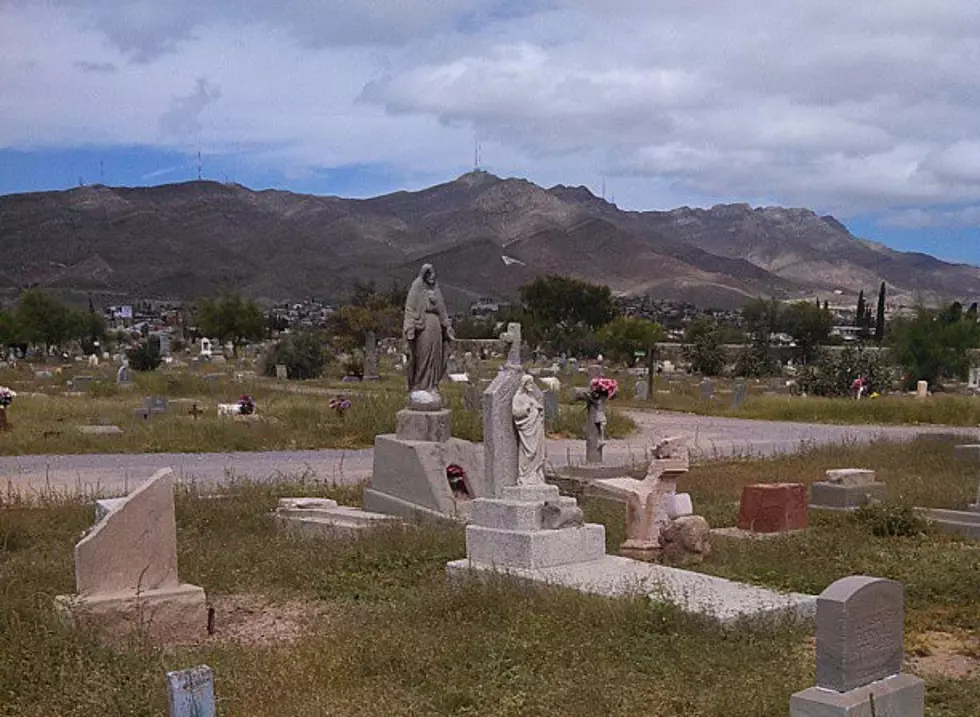
El Paso has a lot of notable landmarks. It has a mountain range running through the city, the worlds biggest lit up star on that very mountain, and it has a downtown theatre that looks like a Spanish cathedral. These barely even scratch the surface but no landmark in the 915 carries the same weight as a 52-acre patch of desert in Central El Paso where more than 60,000 souls have been laid to rest since 1856.
Concordia Cemetery is less of a graveyard and more of a document of everything El Paso has ever been. Outlaws and lawmen. Soldiers and civilians. Immigrants and pioneers. Legends and unknowns. All of them are here, side by side, beneath the same West Texas sky that stretches across the border. And if the stories are to be believed, not all of them are entirely at rest.
This is the full story of Concordia Cemetery: the history, the legends, the famous dead, the infamous living who passed through its gates, and the people working today to make sure none of it is ever forgotten.

Concordia Cemetery Was Born From a Tragedy at a Frontier Ranch
The name Concordia does not come from nowhere. Before it was a cemetery, it was a ranch. Rancho Concordia was established in the 1840s by Hugh Stephenson and his wife, Juana Maria Ascarate Stephenson, a woman born in 1800 into one of the most prominent Spanish aristocratic families in the entire El Paso del Norte region. The Ascarate name carried enormous weight on the border, and Juana brought both her family's land and her family's legacy into the marriage.
In 1856, Juana was killed on the property by a deer she had raised herself. The animal she had tamed turned on her, and she died from her injuries. Her husband, not willing to take her far from the home she had loved, buried her on the ranch grounds. That single burial became the first in what would eventually grow into one of the most significant cemeteries in the American West.
Juana Maria Ascarate Stephenson is remembered today as the First Lady of Concordia. She did not choose the role, but the cemetery exists because of her, and the Concordia Heritage Association has made sure her story is told. When her original headstone was stolen in the years following her death, the CHA replaced it. Her name is not an afterthought. It is the foundation.
By the 1880s, the City of El Paso had purchased part of the cemetery as a public burial ground, and from there it grew quickly. Various communities staked out their own sections, and Concordia became something unusual for the era: a place where the full spectrum of El Paso's population was buried. Not always together, and not always equally, but all within the same walls.
The People Buried Here Tell the Whole Story of the American West

Walk through Concordia long enough and you realize that its sections read like chapters of American history. Catholic and non-citizen Catholic sections. Two separate Jewish sections. Methodist, Mormon, Masonic, and Odd Fellows sections. A dedicated African American section. And something found nowhere else in all of Texas: a Chinese cemetery.
The Chinese community arrived in El Paso in the early 1880s, drawn by the construction of the Southern Pacific Railroad, which was completed in 1881. Some stayed, built businesses, married into local families, and put down roots. The names in the Chinese section of Concordia reflect that blending: you will find headstones with names like Maria Wong and Carlos Chio, the evidence of lives lived at the intersection of cultures.
The military section holds veterans from conflicts spanning more than a century, from the Civil War on both sides, through World War I and II, Korea, and Vietnam. Among the most significant graves in this section belong to the Buffalo Soldiers, members of the 9th and 10th Cavalry Regiments and the 24th and 25th Infantry Regiments. These were the Black cavalry soldiers who served in the post-Civil War frontier, given their name by the Native American tribes they fought against. Concordia holds the remains of 48 Buffalo Soldiers, and the Concordia Heritage Association has worked to ensure a proper memorial stands in their honor.
There is also an infant nursery section, a collection of unmarked or simply marked graves for babies and young children, many of whom died during the 1918 influenza pandemic, which reached El Paso in early 1919. The section is small. The loss it represents is not.

And then there are the names that people travel from across the country and around the world to find.
John Wesley Hardin is Concordia's most famous permanent resident. Born in Bonham, Texas in 1853 to a Methodist preacher, Hardin killed his first man at 15 and spent decades building a reputation as one of the most dangerous gunfighters in the West. He claimed to have killed only those who needed killing, bragged of over 30 deaths, and once had a standoff with Wild Bill Hickok. He became a lawyer after a stint in prison, moved to El Paso, and was shot dead in the Acme Saloon in 1895 by lawman John Selman, who put three bullets in him while he rolled dice. Hardin is buried in Concordia's Catholic section, and he draws more visitors than anyone else in the cemetery. Bob Dylan was so taken by his legend that he named a 1967 album after him.
John Selman himself, who killed Hardin, is also buried at Concordia, though his grave has never been officially located. He was shot and killed less than a year after Hardin's death, in a fight outside the Wigwam Saloon with U.S. Deputy Marshal George Scarborough.
Florida J. Wolfe, known universally as Lady Flo, occupies a different kind of legacy. She was a frontier socialite, rancher, and madam whose influence on El Paso's social life was impossible to ignore. She was known for her philanthropy and her push for racial diversity at a time when neither was fashionable or safe. She died of tuberculosis in 1913 and is buried at Concordia, where she has become one of the cemetery's most enduring presences, in more ways than one.

Moses Carson, younger brother of the legendary frontier scout Kit Carson, is buried here. So is Pascual Orozco, a general of the Mexican Revolution, though his remains were later moved. Victoriano Huerta, another figure of the Mexican Revolution, was once temporarily buried at Concordia as well.
The cemetery's name, borrowed from the Roman goddess of harmony, turns out to be strangely fitting. Concordia holds all of them: the outlaws and the lawmen, the soldiers and the settlers, the famous and the completely forgotten.
Ghost Adventures Came to El Paso and Concordia Was the Main Event
When the television series Ghost Adventures brought its crew to El Paso in 2016, they had two locations on their list. One was the historic De Soto Hotel downtown. The other was Concordia Cemetery. The show's host, Zak Bagans, and his team conducted a full investigation of the grounds, and the entire episode centered heavily on the cemetery's connection to Richard Ramirez, the serial killer known as the Night Stalker, who was born in El Paso and grew up just blocks from Concordia's walls.
The Ghost Adventures visit is not the only television investigation Concordia has hosted. The YouTube paranormal series The Paranormal Files also produced a full episode at the cemetery, confirmed by the Concordia Heritage Association, who posted photos with the show's investigators Colin Browen and Jeff Tomkins. That episode ran nearly two hours and covered both the paranormal investigation of the grounds and a deep dive into Ramirez's El Paso origins, including an interview with one of his childhood friends.
Bunnie XO, whose audience spans millions online, also made a well-documented visit to Concordia for her own ghost hunting content, adding the cemetery to a growing list of high-profile paranormal investigations the site has attracted over the years.
Locally, the cemetery has been a centerpiece of El Paso's ghost tour scene for decades. The Paso del Norte Paranormal Society runs regular tours of the grounds, including expanded programming every October with special Haunted History tours. Lost El Paso Paranormal, founded by Heather Shade and Dean Tarango, runs monthly two-hour ghost tours through Concordia by lantern light, combining theatrics, storytelling, and genuine paranormal investigation into a single experience that has become a staple of El Paso's weird and wonderful event calendar.
The Legends: Shadow People, Lady Flo, and the Shadow Cowboy
The paranormal claims attached to Concordia Cemetery are extensive and deeply local. These are not stories imported from somewhere else. They were born here.
Ghost hunters and visitors have reported shadow figures moving between headstones with no apparent source. Photographic evidence claimed near gunslinger John Selman's gravesite shows what investigators describe as a pair of disembodied legs hanging in mid-air. Near a crib-shaped grave marker in the infant nursery section, two investigators once claimed to photograph a full shadow person, one of the more dramatic documented claims from the grounds.

The wailing woman is one of Concordia's most persistent legends. Leo Duran, third-generation owner of the L&J Cafe across the street from the cemetery, once recalled being woken in the night by the sound of a woman crying out from the cemetery grounds. Convinced someone was in danger, he called the police, grabbed his gun, and ran to investigate. The wailing continued until the moment the cemetery gate was opened. Then it stopped entirely. A full search turned up nothing.
The spirit most commonly identified with that sound is Lady Flo herself. Florida J. Wolfe has been one of the most reported apparitions at Concordia for over a century, and the sounds that drift from the cemetery in the night are often attributed to her by those who live nearby.
A separate legend describes a Shadow Cowboy, a spectral figure on horseback seen riding through the grounds, particularly near the older western-era grave markers. No origin story is definitively attached to the figure, which is part of what makes it compelling.
The infant nursery section carries its own specific legend, separate from the shadow sightings: it is said that women who have had C-sections experience a strange physical sensation near their surgical scar when visiting that part of the cemetery. Whether that claim belongs in the paranormal or the psychological column depends entirely on who you ask.
Hell's Gate: El Paso's Portal to Another Dimension
Above all the individual legends and apparitions, one story defines Concordia's reputation more than any other. Somewhere on the cemetery grounds, according to decades of local legend and a very active paranormal tourism economy, there is a portal to Hell.

The location is called Hell's Gate, and it sits near the old railroad tracks that run along the cemetery's edge. Visitors and investigators have described a strong, inexplicable pull in that area, a sensation that some call a paranormal vortex. Compass needles reportedly behave strangely there. The feeling described by those who stand near it ranges from mild unease to genuine disorientation.
Paranormal tour groups include Hell's Gate as the centerpiece of their Concordia experiences. The Paso del Norte Paranormal Society's guided tours, which run about $25, take visitors directly to the site. Whether the vortex is supernatural, geomagnetic, or entirely invented by a very good story, the legend has taken root so deeply in El Paso's cultural memory that it is essentially inseparable from the cemetery's identity at this point.
Evidence of occult practice has been documented at Concordia over the years as well, which local investigators and historians largely attribute to the cemetery's connection to Richard Ramirez, whose own Satanist practices there as a teenager reportedly inspired others to treat the grounds as a site of dark significance.
Richard Ramirez: The Night Stalker Grew Up in the Shadow of Concordia
No story attached to Concordia Cemetery cuts deeper or carries more complexity than the one involving Ricardo Leyva Munoz Ramirez, born in El Paso on February 29, 1960, and known to the rest of the world as the Night Stalker.
Ramirez grew up in a household defined by violence. His father, Julian, was physically abusive, and the children grew up flinching at footsteps. Richard sustained multiple head injuries in childhood and developed epilepsy. As a boy, his escape from the chaos at home was a short walk to Concordia Cemetery.

He slept there. Not as a stunt or a dare, but because the quiet of the dead was safer than the noise of his own house. By the time he was 11, according to multiple accounts of his early life, Concordia was his refuge. The graveyard was calmer than his father's temper. As he entered his teens and came under the influence of his older cousin Miguel, a Vietnam veteran who exposed him to violent imagery and deeply disturbing ideas, his relationship with the cemetery changed. The place that had been his sanctuary became part of his descent into Satanism.
Later in life, Ramirez would tell people that Concordia gave him a feeling of being safe, quiet, and calm. That same quality that once protected a frightened child would eventually become the backdrop for practices that reinforced everything dark about what he was becoming.
Ramirez left El Paso, moved to Los Angeles, and between 1984 and 1985 committed the string of murders, rapes, and home invasions that made him one of the most feared serial killers in American history. He was convicted and sentenced to death in 1989, and died of cancer in 2013 while still on death row at San Quentin.
His connection to Concordia has never left the cemetery's story. Ghost Adventures cited it as a central reason for their 2016 El Paso investigation. The Paranormal Files built their entire episode around it. And it is why, to this day, reports of Satanist activity within Concordia's walls persist.
The story of Richard Ramirez and Concordia is not a ghost story. It is something harder to look at: a real account of what happens to a child when home becomes the most dangerous place in the world, and a graveyard becomes the only place that feels safe.
The Concordia Heritage Association Is Doing Something Remarkable
For all the legends and the ghost tours and the genuine history, a cemetery is only as alive as the people who care for it. And for Concordia, that means the Concordia Heritage Association.
The CHA has been preserving and restoring Concordia Cemetery since 1990. Over more than three decades, their work has included physical restoration of grave markers, historical research, public programming, educational events, and community partnerships. In 2005, their advocacy helped earn Concordia a Historic Texas Cemetery designation from the Texas Historical Commission. They have raised funds for a dedicated memorial to the 48 Buffalo Soldiers buried on the grounds. When Juana Ascarate Stephenson's original headstone was stolen, the CHA replaced it. They show up for the cemetery the way the cemetery has shown up for El Paso.
Their most recent initiative, a social media series called Stories from the Stones, has taken that work to an entirely new audience. The idea came from CHA board member Louie Zamorano, and the philosophy behind it is the kind of thing that sounds simple until you sit with it. When you look at a headstone, you see two dates. But there is a whole human life in the dash between them, and most of those lives go untold.
Stories from the Stones puts a historian in front of a headstone and asks them to tell that story out loud, on camera, for anyone who will listen. The series covers the legends: John Wesley Hardin, Lady Flo, Juana Ascarate. But it does not stop at the famous names. The unmarked graves get attention too. The John Does. The infants. The ordinary El Pasoans who built this city and were never famous for a single moment.
The response has been overwhelming. El Pasoans are watching, sharing, and asking for more.

The Concordia Heritage Association runs events, tours, and community programming year-round and works closely with historians, educators, and local organizations committed to telling the full story of El Paso. If you want to support their work directly, visit concordiacemetery.org to learn more.
Concordia Cemetery Is El Paso's Most Complete Address

Every city has a place where its full history lives, not the polished version in the history books, but the real one, with all the violence and grief and beauty and strangeness intact. For El Paso, that place is Concordia.
It holds the outlaws and the soldiers, the immigrants and the pioneers, the infants and the centenarians. It holds a Chinese cemetery found nowhere else in Texas. It holds the graves of men who killed dozens and the graves of women who fed hundreds. It holds the story of a frightened boy who found peace among the dead before he became the thing the world still fears. And it holds the work of a nonprofit that has spent 35 years insisting that every single person buried there was a person worth knowing.
Concordia Cemetery is open to the public. You can walk its grounds any day. You can take a ghost tour on a Saturday night. You can follow Stories from the Stones on social media and learn something new about El Paso every week.
Whether you go for the history, the legends, or just the sheer weight of what it means to stand in a place where 60,000 stories are buried in 52 acres of West Texas desert, you will leave knowing something about this city that you did not know before.
For tours, programming, and information on supporting preservation efforts, visit the Concordia Heritage Association.
For ghost tours and paranormal investigations, visit the Paso del Norte Paranormal Society and Lost El Paso Paranormal.
Thomas P. Moad: 1st El Paso Officer Killed In The Line Of Duty
Gallery Credit: Grizz
Lost El Paso Paranormal Is Your Year Round Spooky Stop
Gallery Credit: Grizz
Haunted El Paso Neighborhoods
More From 93.1 KISS FM